
How to Practice Tennis Alone
Six ways to train without a partner, what each one actually builds, and a 60-minute session you can run this afternoon. Including an honest account of what solo practice cannot give you.
Most players practice alone because the alternative is not practicing. Partners cancel, court time is at odd hours, and coaching costs more per hour than most people can spend twice a week.
The good news is that a large share of what actually improves your tennis is trainable by yourself. The catch is that the parts you can train alone are not the parts most players spend their solo hour on.
What You Can and Cannot Train Alone
Tennis skills fall roughly into two groups. Technique, consistency, footwork patterns, serve mechanics and fitness are all closed skills: they have a repeatable shape, so repetition improves them, and you do not need another person for repetition. Point construction, reading an opponent, handling pressure at 4-5 in the third: those are open skills. They need someone on the other side who is trying to beat you.
So the honest frame for a solo session is this: you are building the machinery, not the match. Spend the hour on the closed skills, deliberately, and save the open ones for when you have a live opponent.
Six Ways to Practice Without a Partner
1. The wall
A backboard or any flat wall is the most underrated training tool in tennis, and it is free. The ball comes back faster than in a rally, which forces early preparation and short backswings, and you get far more contacts per minute than you would on court with a partner.
Use it deliberately rather than just bashing: count consecutive balls above a taped line, alternate forehand and backhand, or work a target on the wall for direction. The limitation is that the bounce is flatter and faster than a real ball, so wall time sharpens preparation and hands more than it does depth control.
2. Shadow swings and footwork
No ball, no court needed. Shadow swings let you rehearse the exact shape of a stroke without the interference of having to actually hit something, which is why coaches use them to rebuild technique. Ten minutes of deliberate shadow work, with the split step and recovery steps included, does more for a stroke change than an hour of hitting the old pattern.
Add ladder work, spider runs or simple cone patterns and you are training the movement that gets you to the ball in the first place, which is the part most club players are actually missing.
3. Serve baskets
The serve is the one stroke in tennis that needs no partner at all, and it is the stroke most players neglect precisely because they only practice it in the five minutes before a match.
Take a basket to an empty court and hit 60 to 100 serves with a purpose for each set of ten: toss consistency, one target, second-serve kick, or a full service-motion rhythm. Put a ball can or a towel in the corner of the box as a target. This is the single highest-return solo session in tennis, and the only gear it requires is enough balls and something to carry them in.
4. A ball machine
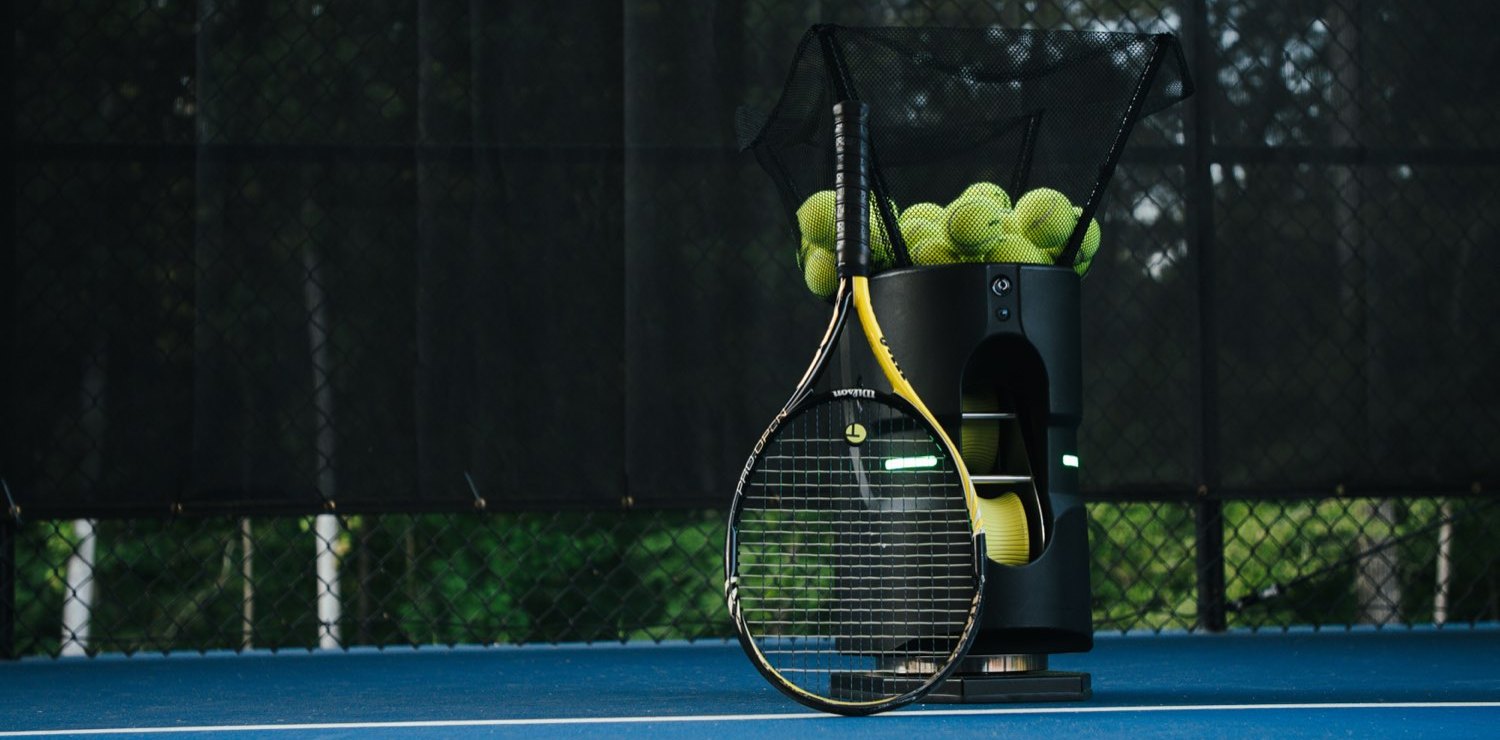
A ball machine gives you what a wall cannot: a real bounce, a chosen depth, a chosen spin, and the same ball as many times as you want. For grooving a stroke or drilling a pattern, it is the closest thing to a coach feeding you, and it never gets tired at ball 200.
Machines start around $700 for basic launchers and run past $2,000 for models with app control and AI drills. Ours are in that upper group: the Partner Lite at $1,525 stays in one place, and the Partner V2 at $2,275 moves around the court while it feeds. If you are shopping, our buyer’s guide compares six popular models honestly, ours included.
5. Video and self-analysis
A phone on a tripod is the cheapest coaching you will ever buy. Film a few minutes from behind and a few from the side, then watch at quarter speed. Most players discover something in the first session that no amount of feel would have told them, usually about the contact point or the finish.
Film the same drill once a month rather than every session. Technique changes are slow, and watching daily footage mostly teaches you to hate your own forehand.
6. Fitness and movement
Off-court work is solo by nature and it is where a lot of match outcomes are actually decided. Split-step timing, first-step explosiveness, lateral shuffles, and the endurance to hit the same forehand in the third set as in the first. None of it requires a court, and all of it shows up in your tennis.
A 60-Minute Solo Session
Structure is what separates practice from hitting. Here is an hour that covers the closed skills in a sensible order, and it works whether your feed is a wall or a machine.
| Time | Block | What you are building |
|---|---|---|
| 0–10 min | Shadow swings, movement, split steps | Warm-up and stroke shape |
| 10–25 min | Wall or machine: crosscourt forehands, then backhands | Consistency and preparation |
| 25–35 min | Directional work: down the line, to a target | Control and racquet-face awareness |
| 35–50 min | Serve basket, 60–100 balls in sets of ten | The stroke nobody drills enough |
| 50–60 min | Movement finisher, then film one drill | Fitness and a record to review |
Adjust the ratio, not the structure: warm up, groove, direct, serve, condition. If you only have thirty minutes, cut the middle two blocks in half and keep the serves.
What Solo Practice Cannot Replace
Two things, and it is worth being clear about them.
Reading an opponent. No wall and no machine disguises a shot, shows you a shoulder turn that tells you where the ball is going, or makes you choose between three plays under time pressure. That perception is trained only against people.
Competitive pressure. Hitting a clean backhand in practice and hitting one at 4-5 in the third are different skills. Match play is the only way to train the second one.
The strongest schedule for most club players is two solo sessions a week for the machinery, plus one hitting session or match for everything above. Solo practice makes the strokes; live play teaches you when to use them.
Gear, Cheapest First
- Nothing → shadow swings, footwork patterns, fitness work. Genuinely free, and the least-used option on this list.
- A wall → free, if your club or park has one. The highest contacts-per-minute of any method.
- A basket of balls, about $60–$100 → 60 to 100 balls and a hopper to carry them. This unlocks serve practice, which is the best return on any solo hour. Our guide to picking balls up covers what to carry them in.
- A phone tripod, about $25 → the cheapest feedback available.
- A ball machine, $700 and up → a real bounce, on demand, at the depth and spin you choose. Worth it when you are drilling several times a week and a wall no longer gives you what you need.
One warning about the last one: a machine turns your solo hour into a pickup problem. A full hopper of 140 balls is about nine and a half minutes of hitting, and then those balls are all over the court. Budget for a hopper at minimum, and if you are drilling several times a week, read our pickup guide before you decide how you want to solve it.
Frequently Asked Questions
How can I practice tennis alone without a court?
Shadow swings, footwork ladders and fitness work need no court at all, and a wall needs only a flat surface. Between them you can train stroke shape, movement and conditioning, which covers most of what improves a club player.
Is hitting against a wall good practice?
Yes, and it is underrated. The wall returns the ball faster than a rally partner, so it forces early preparation and compact swings, and it gives you more contacts per minute than any other method. It does not reproduce a real bounce or let you work on depth, so use it for preparation and hands rather than for shot placement.
What is the best solo tennis drill?
Serve practice with a basket. The serve is the only stroke that needs no partner, it starts every other point you play, and most players never drill it deliberately. Sixty to a hundred serves with a specific purpose per set of ten will change your service game faster than anything else you can do alone.
How often should I practice alone?
Twice a week is a good target for most club players, paired with one hitting session or match. Solo work builds the strokes and the movement; live play trains the decisions. Neither substitutes for the other.
Do I need a ball machine to practice alone?
No. A wall, a basket of balls and your own footwork cover most of what solo practice can build, at almost no cost. A machine is worth it when you are drilling several times a week and you need a real bounce at a chosen depth and spin, which a wall cannot give you.
Can you get better at tennis by practicing alone?
Yes, for technique, consistency, serve and movement, which is most of what separates club levels. What solo practice cannot build is reading an opponent and handling competitive pressure, so the players who improve fastest combine solo work with regular live play.